Are You a Passive Man or an Active Man?
The modern church has a problem it refuses to diagnose honestly. Pastors hold conferences about declining male attendance, commission studies on why men are leaving, and tweak the worship playlist — but they will not say the uncomfortable thing out loud: the church did not lose men. It drove them away.
For generations, the church’s answer to male restlessness was not discipleship — it was domestication. Instead of training men to identify challenges, build capacity, and advance, it handed them a bulletin and pointed them to a seat. Instead of forging conquerors, it produced spectators. It traded the arena for the auditorium, the mission for the meeting, and the warrior’s call for the volunteer coordinator’s clipboard. Men were told to sit down, stay quiet, and wait for a committee to assign them something safe to do.
You weren’t lectured into greatness. You were lectured into passivity. And somewhere along the way, a system that should have sharpened you decided it was more comfortable to manage you instead.
But you weren’t built to be managed. You were built for dominion.
Yes, you were built for dominion — and that is not a modern concept invented by motivational speakers. It is the oldest mandate in Scripture. In the very beginning, before sin, before failure, before the fall, God looked at Adam and Eve and declared: “Be fruitful and multiply, fill the earth and subdue it. Have dominion over the fish of the sea, the birds of the air, and every living creature” (Genesis 1:28). Dominion was not a suggestion. It was the first assignment. And it was given to man before the church had a committee, a volunteer coordinator, or a signup sheet.
The Standard: Benaiah ben Jehoiada The Intel: 2 Samuel 23:20–23
If you want to understand the “Man of Action,” look at Benaiah. He didn’t wait for a royal decree to act; he saw a threat and neutralized it.
The Narrative Retelling:
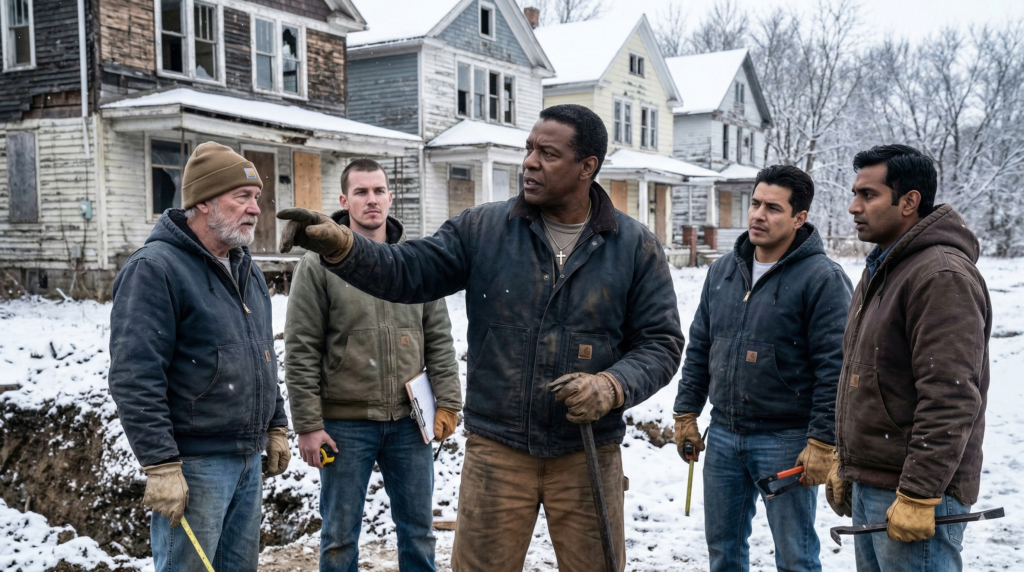
Imagine a morning where the sky is the color of lead, and the snow is waist-deep. Most men are huddled by the fire, complaining about the weather. Not Benaiah. He’s tracking a predator. He follows a lion into a narrow pit — a kill zone where there is no room to miss and no way to escape. On the lion’s turf, in the worst possible conditions, Benaiah doesn’t wait for it to pounce. He drops into the pit and finishes the fight.
Later, he’s confronted by an Egyptian giant wielding a spear the size of a bridge beam. Benaiah is under-equipped, holding nothing but a walking stick. He doesn’t retreat. He closes the gap, rips the spear out of the giant’s own hands, and uses the enemy’s weapon to end the conflict.
Benaiah didn’t ask for permission to be great. He took the initiative, and because he did, King David put him in charge of the entire Royal Guard. Recognition followed his agency.
The Divide: Two Paths for One Life
Which man are you? The one waiting for a sign, or the one creating a solution?
| The Passive Man | The Sovereign Man |
|---|---|
| Identity: A consumer of “content” and lectures. | Identity: A steward of the King’s mission. |
| Mindset: “What can the church do for me?” | Mindset: “What territory am I seizing today?” |
| Response: Waits for permission or a “calling.” | Response: Identifies a need and executes. |
| Goal: To be “good,” safe, and obedient. | Goal: To be effective, dangerous to evil, and loyal. |
| Contribution: Gives a percentage of his paycheck. | Contribution: Gives his strength, skill, and leadership. |
What It Means to Be a Sovereign Man
To be a Sovereign Man means reclaiming your Agency. It is the realization that God has already given you the “green light” to lead, protect, and build. You do not need a pastor’s permission to start a business, to mentor a younger man, to protect the vulnerable in your neighborhood, or to call out cowardice when you see it.
Practical Sovereignty looks like this:
Ownership: You stop blaming your upbringing, your boss, or your “boring” church. If your environment is chaotic, you are the one called to bring order.
Aggression (Directed): Not the “bully” kind, but the “Benaiah” kind. You move toward the “lions” in your life — the debts, the broken relationships, the spiritual apathy — and you engage them head-on.
Identification: Look hard at your church and your community. Don’t just observe — assess. Where are the broken families that no one is addressing? Where are the young men drifting without a father figure, a mentor, or a standard to rise to? Where is the church silent on something it should be shouting about? Where is the neighborhood crumbling because no man of substance has claimed responsibility for it? These are your assignments. These are your pits. The lions are already there — you just have to stop pretending they aren’t.
Brotherhood: You don’t answer these challenges alone. Find the men in your church, your workplace, your neighborhood — men who see what you see and refuse to look away. Gather them. Name the problem in plain language. Assign ownership. Move as a unit. Sovereignty is not isolation; it is leading a formation. Benaiah was exceptional, but even he served within David’s Mighty Men — a band of warriors who refused to accept what everyone else had learned to tolerate. You need that band. Build it.
The Trajectory: Where Do the Paths Lead?
The End of the Passive Man: He ends up “nice,” but irrelevant. He spends his life in the middle of the pack, never causing trouble but never making a difference. He retires with a shelf full of participation trophies, wondering why his sons don’t respect him and why the world seems to be falling apart. He was domesticated, and in the process, he lost his soul.
The End of the Sovereign Man: He ends up with scars, but he also ends up with a legacy. Like Benaiah, he earns a seat at the table of the King. He is a man of weight. His family feels secure, his community is better because he exists, and when he stands before God, he doesn’t hand back a buried talent — he hands back a conquered kingdom.
The Call to Rebellion
It is time to rebel against the restraints of modern religious organizations that want you to be a “docile sheep.” God called you to be a shepherd — and shepherds carry staffs to fight off wolves.
Don’t be cowarded into submission. Don’t retreat into the corner of “well-behaved” religious passivity. If the structure of your church seeks only to make you a “yes man,” then assert your God-given agency. Start a mission in your garage. Lead a movement in your workplace. Look your pastor in the eye and say, “I see a problem, I have men who are ready, and we’re going to handle it” — not as a rebel, but as a soldier reporting for duty. And if the institution won’t move, move without it. The mission is bigger than the organization.
Gather the men. Name the challenge. Execute.
Your Mission:
Stop Asking: Stop waiting for a “volunteer coordinator” to give you a job.
Open Your Eyes: Identify the real lions — in your church, your family, your neighborhood. Name them out loud to other men.
Gather Your Band: Find two, three, five men who see what you see. Form the unit. The Mighty Men didn’t wait for a committee — they rallied around a man with a mission.
Start Doing: Find a pit today. Find a problem that needs a man’s strength, gather men of like mind, and solve it together.
Stand Tall: When the system tries to quiet you, remember that you serve the Lion of Judah, not the Bureaucracy of Religion.
Take the spear. Kill the lion. No permission needed.